A companion to The Ghost That Keeps the Records
A journal
you can burn.
Somewhere to put what you have been carrying. And a fire for when you are done carrying it.
Free, with no account. Your pages are encrypted on your phone. You can lock the app with Face ID or a fingerprint, and back it up to your own iCloud Drive or Google Drive. In English and Japanese.
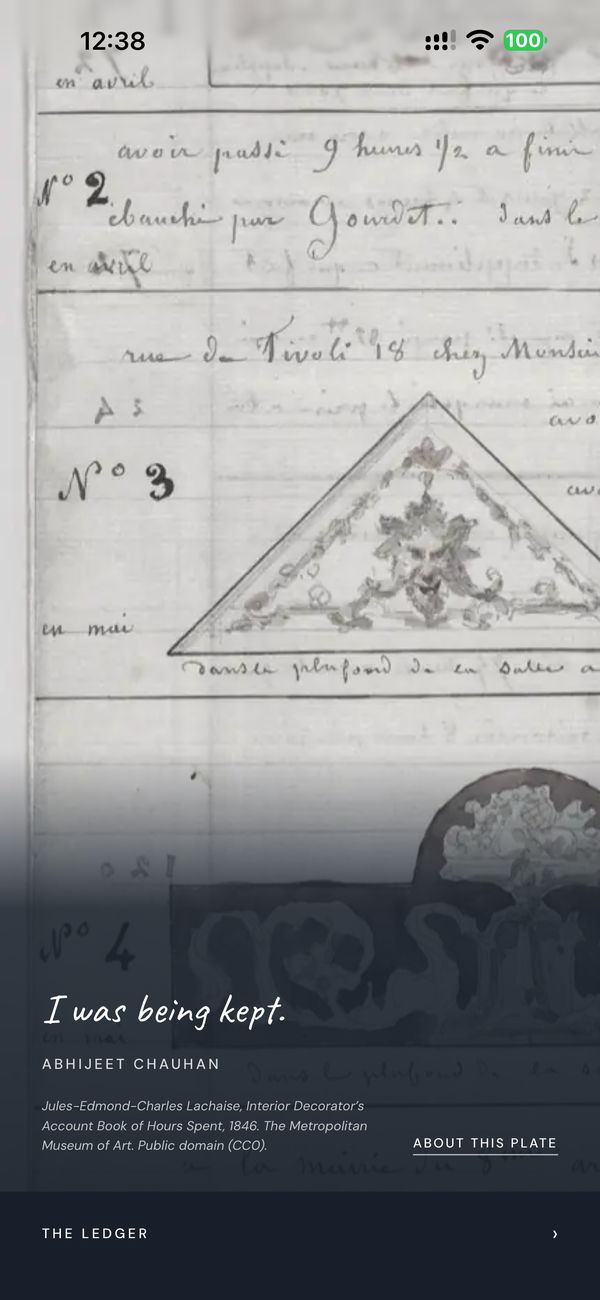
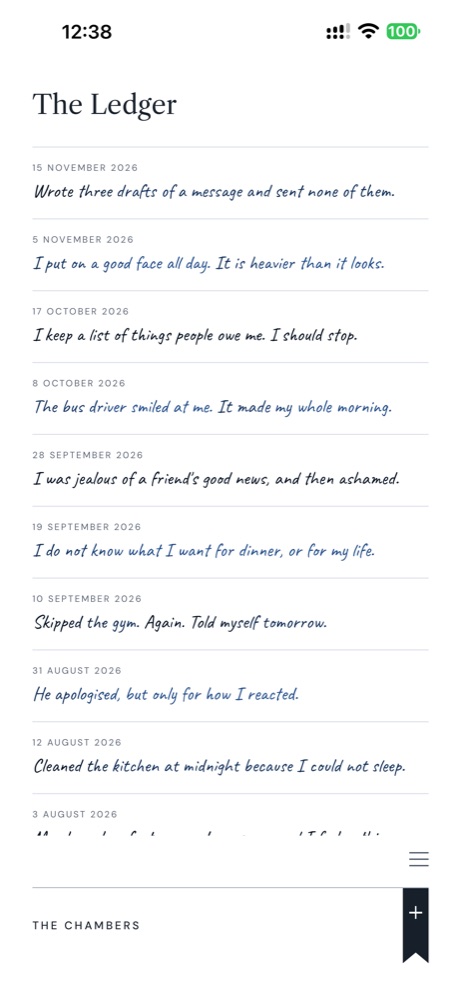
You keep a record of the old grievances, the ones that never closed. Write them down and they stay close, filed, waiting. Not a diary. A shrine to what closed.
Abhijeet burned decades of journals to arrive at the chapter this app comes from. This is the practice, not a metaphor for it.
What it does
The Ledger
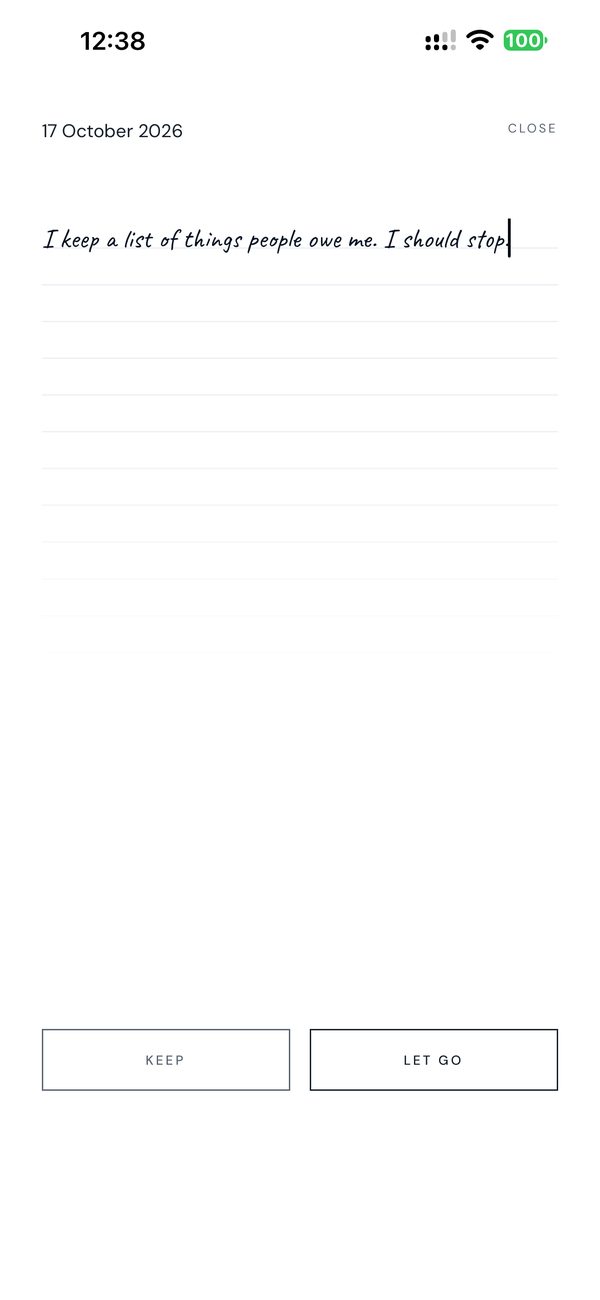
Type it, or use your phone's own dictation. It stays on your phone. You need no account to start.
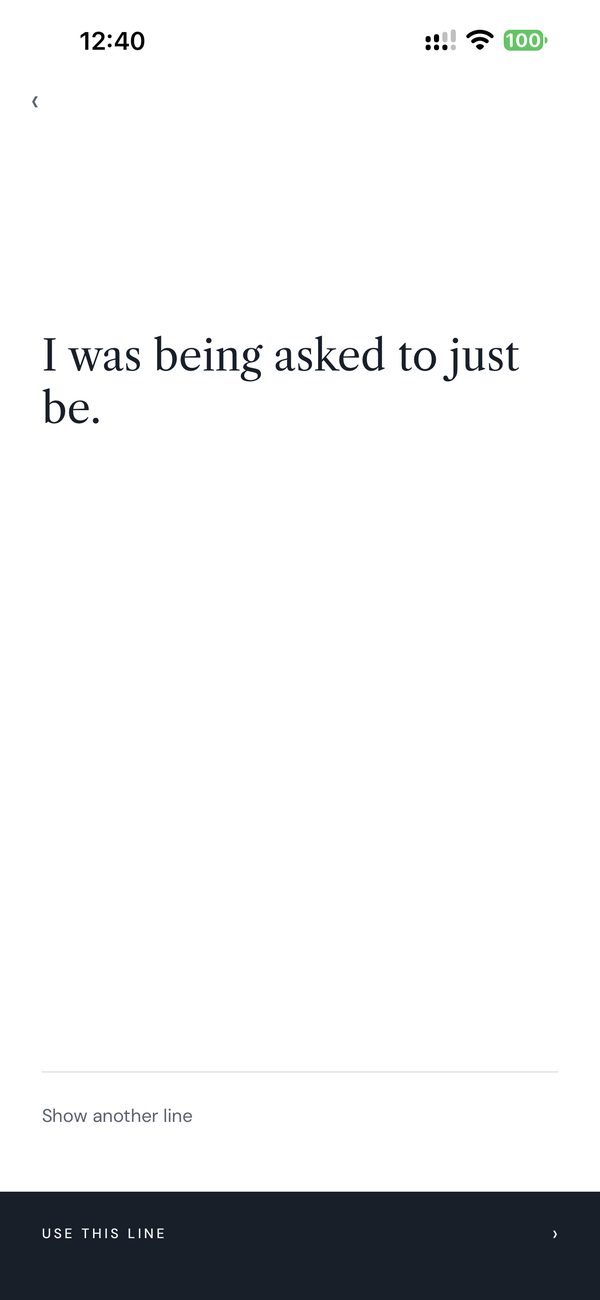
The Chambers
Themed lines of inquiry from the book, so you choose what you are working on. One line at a time, to write from.
How the fire works
Six steps, and the second one is the whole practice.
Then you burn it. Not a delete button, a fire. Gone, with no recycle bin and no undo. That is the point.
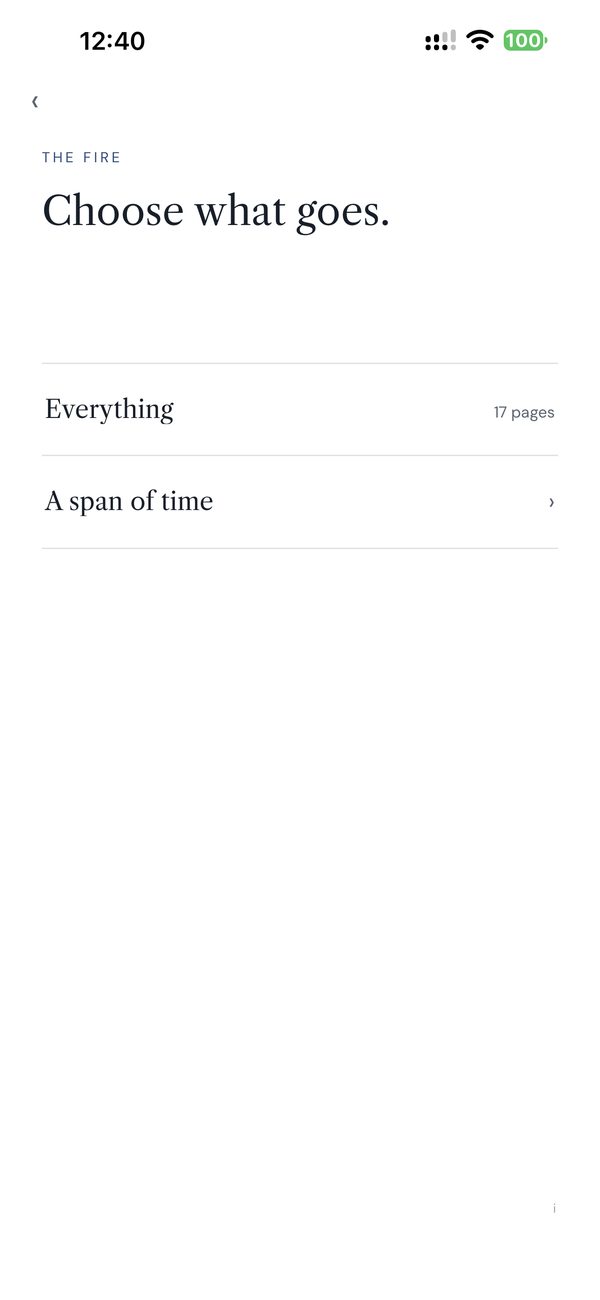
- 01
Choose
Everything, or a span of time.
- 02
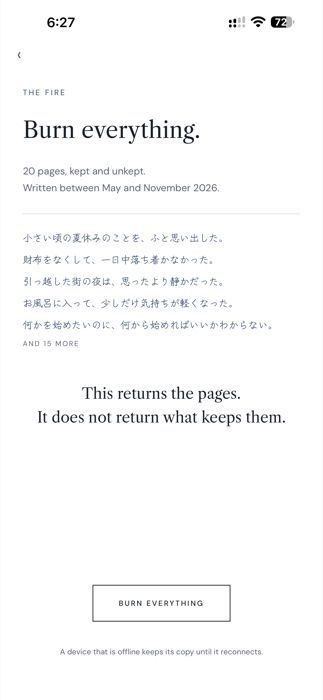
Pass through
One page at a time, in order. You cannot skip to the end. Keep, or let go.
- 03
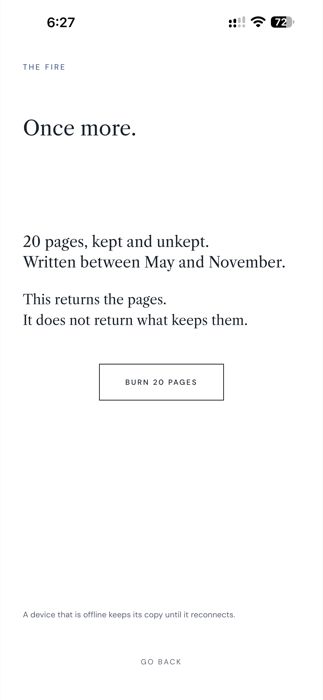
The weight
How many pages. What span of your life they cover. Facts, nothing else.
- 04
The line
One sentence, before the last step: this returns the pages, not what keeps them.
- 05
The fire
No animation, no sound, no congratulation. A slow fade.

- 06
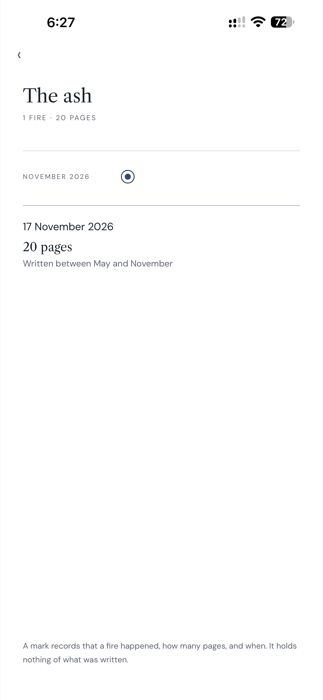
The ash mark
A date stays. Never what was in them.
This returns the pages. It does not return what keeps them.
Why burn
Most journals end up as the opposite of what they promise. You start one to be honest, and within a few pages you are already writing for someone: a future version of yourself, a version of the story that reads better, someone who might understand you eventually. That habit does not need an actual reader to exist. Alone in a room, door locked, most of us are still performing for one.
There is a second thing working against honesty, and it is not imagined. A journal found and read by the wrong person changes what gets written next, sometimes for years. Once a page has been read once by someone it was never meant for, every page after it gets written a little differently, whether you notice or not.
Burning answers both. Nothing written here is read by anyone, and what you burn is not kept for later, which means there is no one left to write for and nothing left to guard against. That is not a privacy feature added to a journaling app. It is the condition that has to exist before the writing can be fully honest in the first place.
It is also, before it was anything else, something Abhijeet did with his own journals, for his own reasons, in the book this app comes from. You do not need to have read it. The practice is the same either way.
What it will never do
Your pages are encrypted on your phone, and no copy of what you write is sent to us.
No AI
Nothing summarises, scores, or explains what you write.
No streaks
Miss a month. Nothing happens.
No badges
No levels, no scores, no progress bars.
No guilt
The app never notices you were away.
No feed
Nothing to share, no one to compare yourself with.
No prompting
Nothing tells you when you are ready.
Questions
Why build an app around burning what you write?
Two patterns matter here, not just one book: a journal found and read by someone it wasn't meant for, and the quieter fact that even alone, most of us write for an audience that isn't there. Burning removes both, for good. It's also the practice the book is built around, if you want that story too.
What if I only want to burn some of it?
You choose each time: everything, or a span of time. Then you go through the pages one at a time and keep or let go of each. Anything you keep stays.
What happens if I never burn anything?
Nothing. There's no limit and nothing prompts you to. It stays in the Ledger for as long as you want it there.
What about my backup?
Burning deletes the pages from your phone at once. There is no recovery. If you turned on backup, each backup replaces the last one, so a burned page leaves it the next time it runs.